
Hyperbaric Oxygen Therapy
Grounded in evidence. Led by self-trust.
Hyperbaric Oxygen Therapy (HBOT)

HBOT involves breathing 100% pure oxygen in a gently pressurized environment. Under these conditions, oxygen becomes more saturated by the body, supporting its natural processes of repair, regulation, and recovery. In this environment Oxygen dissolves into the blood plasma and delivery of oxygen to tissues is no longer limited by available red blood cells.
At Wild Heart Wellbeing, this work is held with care, consent, and respect for individual choice. HBOT is offered as a supportive modality and one of many tools that can support the body’s own intelligence when the conditions are right.
As with any medical treatment, outcomes for targeted conditions vary by individual. Our role is to provide the conditions that allow that process to be supported, safely and with integrity.
What Is Well-Established About HBOT ?
-
embolisms (air or gas bubbles in the bloodstream, which may travel to the brain or lungs);
carbon monoxide poisoning (from inhaling smoke or car exhaust);
gas gangrene;
crush injury, Compartment Syndrome and other acute traumatic problems where blood flow is reduced or cut off (e.g., frostbite);
decompression sickness (the bends);
enhancement of healing for wounds such as diabetic foot ulcers;
exceptional blood loss (anemia);
intracranial abscess (an accumulation of pus in the brain);
necrotizing soft tissue infections (flesh-eating disease);
osteomyelitis (bone infection);
delayed radiation injury (e.g., radiation burns that develop after cancer therapy);
skin grafts and flaps that are not healing well;
thermal burns (e.g., from fire or electrical sources); and
idiopathic sudden sensorineural hearing loss (ISSHL).
Some provincial healthcare plans cover the cost of HBOT treatments if prescribed by a doctor for only these 14 conditions. For further information on Health Canada’s stance on HBOT, visit their website at link. Health Canada recognizes hyperbaric oxygen therapy as a medical treatment when used in approved clinical contexts.Improve oxygen availability to tissues with reduced circulation
Increase oxygen delivery throughout the body
Support wound healing in specific medical situations
Be used in hospital and clinical settings for clearly defined indications
These applications are governed by strict protocols, safety standards, and medical oversight.
Why Oxygen Matters

Oxygen plays a foundational role in how the body functions, adapts, and repairs.
Under hyperbaric conditions, oxygen is delivered at increased atmospheric pressure. This allows more oxygen to dissolve into the bloodstream and reach areas that may be difficult to access through normal circulation alone.
Because of this, hyperbaric oxygen therapy is commonly explored in relation to tissue repair, circulation, inflammation, neurological support, support after blood loss/anemia and recovery processes.
Why Hyperbaric Oxygen Therapy Belongs Here
-
Hyperbaric Oxygen Therapy exists at Wild Heart because it aligns with how we hold care.
Our approach is safety-first and consent-led. Sessions are unrushed. Questions are welcomed. People are supported in making informed choices that feel right for them.
While the technology itself is evidence-informed, the experience here is held with humanity. Care is never reduced to protocol alone.
Wild Heart also exists as a bridge. Hospital-based HBOT can involve long waitlists and limited accessibility. We offer an alternative way to access medical-grade HBOT, on your own timeline, and by choice.
-
Wild Heart does not replicate the environment and clinical feel of hospital-based hyperbaric treatment, nor do we make medical claims about outcomes.
Instead, we offer hyperbaric oxygen therapy as a supportive, technology-based remedy, held within a space that prioritizes:
Safety and informed consent
Respect for individual autonomy
Transparency about what HBOT is and is not
Choice, rather than prescription
Sessions are approached thoughtfully, with attention to comfort, pacing, and the nervous system. People are encouraged to engage with HBOT as part of a broader, self-led approach to wellbeing.
CARE-LED HYPERBARIC OXYGEN THERAPY
What a session feels like….
Before beginning HBOT at Wild Heart Wellbeing, everyone completes an intake and consent process. This includes a review of relevant health history, safety considerations, and clear waivers outlining what HBOT is and is not, including possible risks. Transparency Matters.
These forms exist to support informed choice and safety. All questions are welcome. Forms may be reviewed in advance. Signatures are completed in person so everything can be discussed clearly, together. Nothing moves forward without clarity, comfort, and consent.
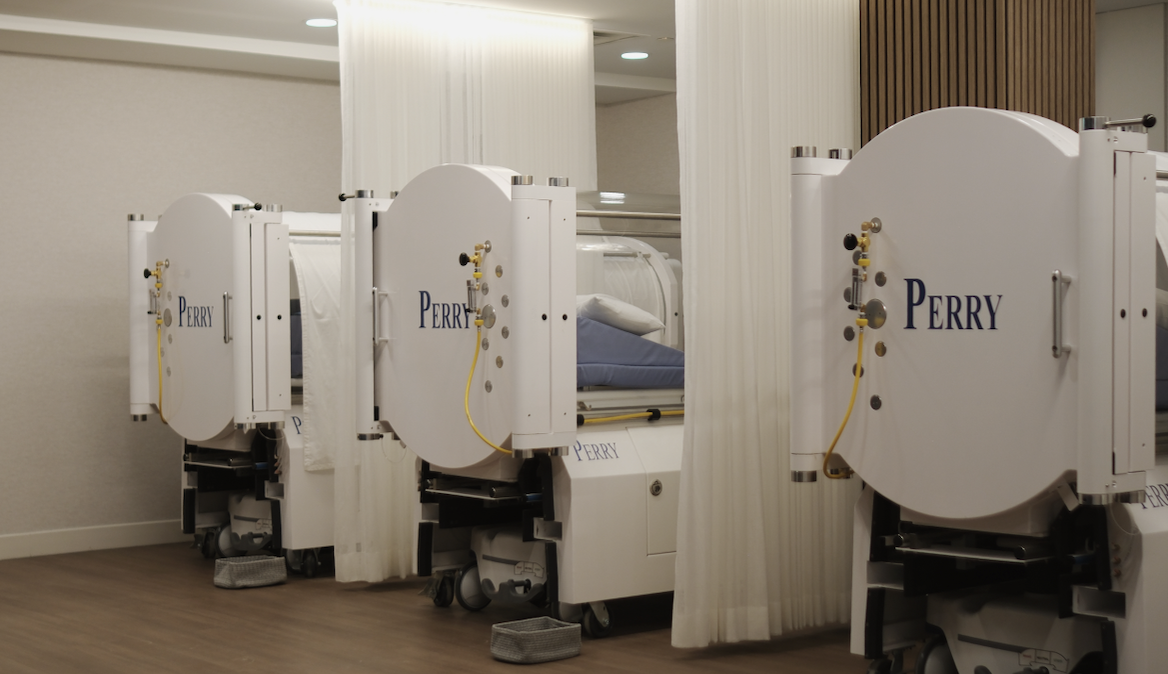
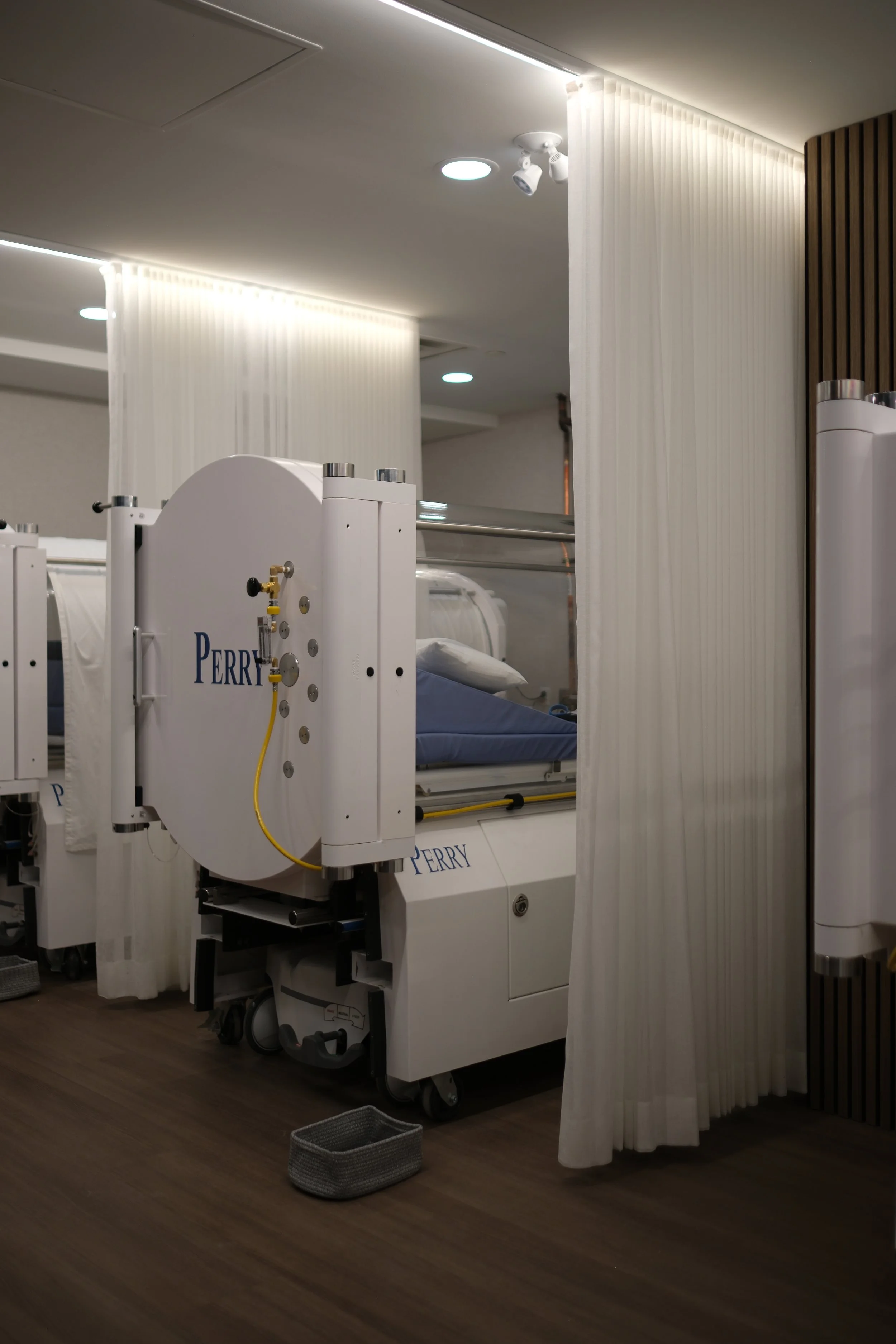
Before anything begins, you’ll be gently oriented to the chamber and the experience itself. We’ll walk you through what it feels like, what to expect, and answer any questions so nothing feels rushed or unfamiliar. The chamber is clear and spacious, designed to support comfort, visibility, and a sense of ease throughout your session.
When you’re ready, you’ll get comfortable on the bed, and your technician will gently slide you into the chamber before the door is closed. From there, the session begins. As the chamber pressurizes, you may notice a gradual increase in pressure, similar to what you might feel while driving through the mountains or during airplane ascent. Some people experience ear popping during this phase. The pace of pressurization is always adjusted to the individual, allowing your body the time it needs to adapt comfortably.
Once the session is underway, most people spend about an hour resting in the chamber. You’re welcome to read, watch something familiar, rest, or simply be still. At the end of each session, the chamber slowly depressurizes. You’ll likely notice sensations similar to the beginning of the session, and again, the pace is tailored to your comfort. Your technician remains present throughout, supporting you at every stage.
Concerns such as claustrophobia are addressed with care and transparency. Nothing is rushed.
Safety & Integrity
Safety is foundational at Wild Heart Wellbeing. Not as a checkbox, but as a lived commitment.
Our Hyperbaric program is held to rigorous standards, supported by medical-grade equipment, clear protocols, and ongoing education. Every session is approached with care, consent, and transparency.
What this means in practice:
Medical-grade, CSA-approved Hyperbaric Chambers
Clearly defined operating protocols
Certified training and ongoing safety education
Informed consent at every stage
Honest conversations about who HBOT may not be appropriate for
We take safety seriously enough to involve people whose life’s work has been setting the standards others follow.
Before beginning:
• A thorough intake is completed
• Contraindications are reviewed
• Pressure protocols are selected intentionally
• You are educated on what to expect
Common considerations may include:
• Ear pressure or difficulty clearing
• Temporary fatigue
• Mild, temporary vision shifts in longer protocols
Rare but possible risks are discussed during intake. Transparency is part of informed choice.
We take safety seriously enough to involve people whose life’s work has been setting the standards others follow.
Safety & Training Advisory
President, Shanfe Research and Consulting Ltd.
Chair of the Canadian Standards Association (CSA) Z275.1 Hyperbaric and Compressed Air Environments, Vice-Chair, CSA Z275 Technical Committee on Diving and Hyperbaric Operations, Executive Board Member, Canadian Undersea and Hyperbaric Medical Society Member, Undersea and Hyperbaric Medical Association (UHMS) Safety Committee, Recipient of the Paul C. Baker Award for contributions to hyperbaric safety
Sherry’s work shapes how hyperbaric safety is defined, regulated, and upheld across Canada and internationally.
Sherry Ferguson
MSc
Francois Burman
Int(PE), MSc, FSAIW
Vice President, Divers Alert Network Safety Services
Member of NFPA-99 (Hyperbaric Health Care Facilities)
Member of NFPA-53 (Safe Practices in Oxygen-Enriched Atmospheres)
Contributor to ASME PVHO, CSA Z275.1, and UHMS Safety Committees
Author of multiple guidance and risk-assessment publications for hyperbaric and recompression chamber facilities. Francois has conducted over 200 safety assessments of hyperbaric facilities worldwide.
Robert Sheffield
BA, CHT
Director of Education, International ATMO
Co-author of the CHT/CHRN Certification Exam Practice Book
Past President, UHMS Gulf Coast Chapter
Former Chair, NFPA 99 and 99B
Former Chair, UHMS Hyperbaric Oxygen Safety Committee
Robert’s work focuses on education, compliance, and operational safety within hyperbaric environments.
Frequently Asked Questions
Our approach is safety-first and consent-led. Sessions are un-rushed. Questions are welcomed. People are supported in making informed choices that feel right for them.
-
Hyperbaric Oxygen Therapy is commonly explored outside of the regulated indications in relation to:
• Recovery and repair
• Neurological support
• Longevity and vitality
• Inflammation and tissue healthThe effects of Hyperbaric Oxygen Therapy are connected to increased oxygen delivery throughout the body. Research and clinical use have shown this may support the body in the following ways:
• Supporting oxygen delivery to areas experiencing injury or reduced oxygen supply
• Encouraging the formation of new blood vessels, a process known as angiogenesis
• Supporting tissue repair and wound healing
• Assisting immune function as the body responds to infection or stress
• Supporting cellular repair and regeneration processes
• Helping reduce the impact of certain toxins within the body
• Assisting in the resolution of gas-related obstructions, such as those seen in decompression sickness
• Supporting circulation through post-session arterial dilation, which may benefit overall organ function
• Influencing inflammatory pathways by reducing the production of pro-inflammatory cytokines, which may support the body’s ability to regulate inflammationThis information is provided for general understanding only and does not constitute medical advice.
If you’re curious, we invite conversation.
-
HBOT is widely used and well studied. Whether it’s appropriate depends on the individual. At Wild Heart, every experience begins with screening, clear information, and informed consent.
-
Most people describe sessions as calm and restful. Sensations can vary and are always explained beforehand so there are no surprises. The pressure can mimic a feeling of getting to altitude in an airplane, or diving under water. It should not hurt by any means, and we can go as slow as needed, so you are comfortable at all times.
-
In some clinical settings, Hyperbaric Oxygen Therapy is structured over a series of sessions. For example, a protocol may include 40 sessions delivered Monday through Friday at the same time each day. We share this as context, not expectation.
At Wild Heart, structure is discussed through informed conversation. Frequency and pacing are guided by safety, readiness, and individual goals.
-
That’s completely normal. Nervousness is respected here. You’re never rushed, pressured, or asked to push past your comfort. All staff are trained to support you fully and exactly where you're at. Physically, and emotionally.
-
Our team is trained to support both safety and comfort, meeting you exactly where you are throughout the experience.
-
The equipment is the same CSA approved chambers that are used in our hospitals. What's different is the environment. Care here is slower, consent-led, and designed to feel calm and human rather than clinical.
-
The effects of Hyperbaric Oxygen Therapy are connected to increased oxygen delivery throughout the body. Research and clinical use have shown this may support the body in the following ways:
• Supporting oxygen delivery to areas experiencing injury or reduced oxygen supply
• Encouraging the formation of new blood vessels, a process known as angiogenesis
• Supporting tissue repair and wound healing
• Assisting immune function as the body responds to infection or stress
• Supporting cellular repair and regeneration processes
• Helping reduce the impact of certain toxins within the body
• Assisting in the resolution of gas-related obstructions, such as those seen in decompression sickness
• Supporting circulation through post-session arterial dilation, which may benefit overall organ function
• Influencing inflammatory pathways by reducing the production of pro-inflammatory cytokines, which may support the body’s ability to regulate inflammation